
It’s Not “Just a Cable” — It’s Your Street’s Power Supply
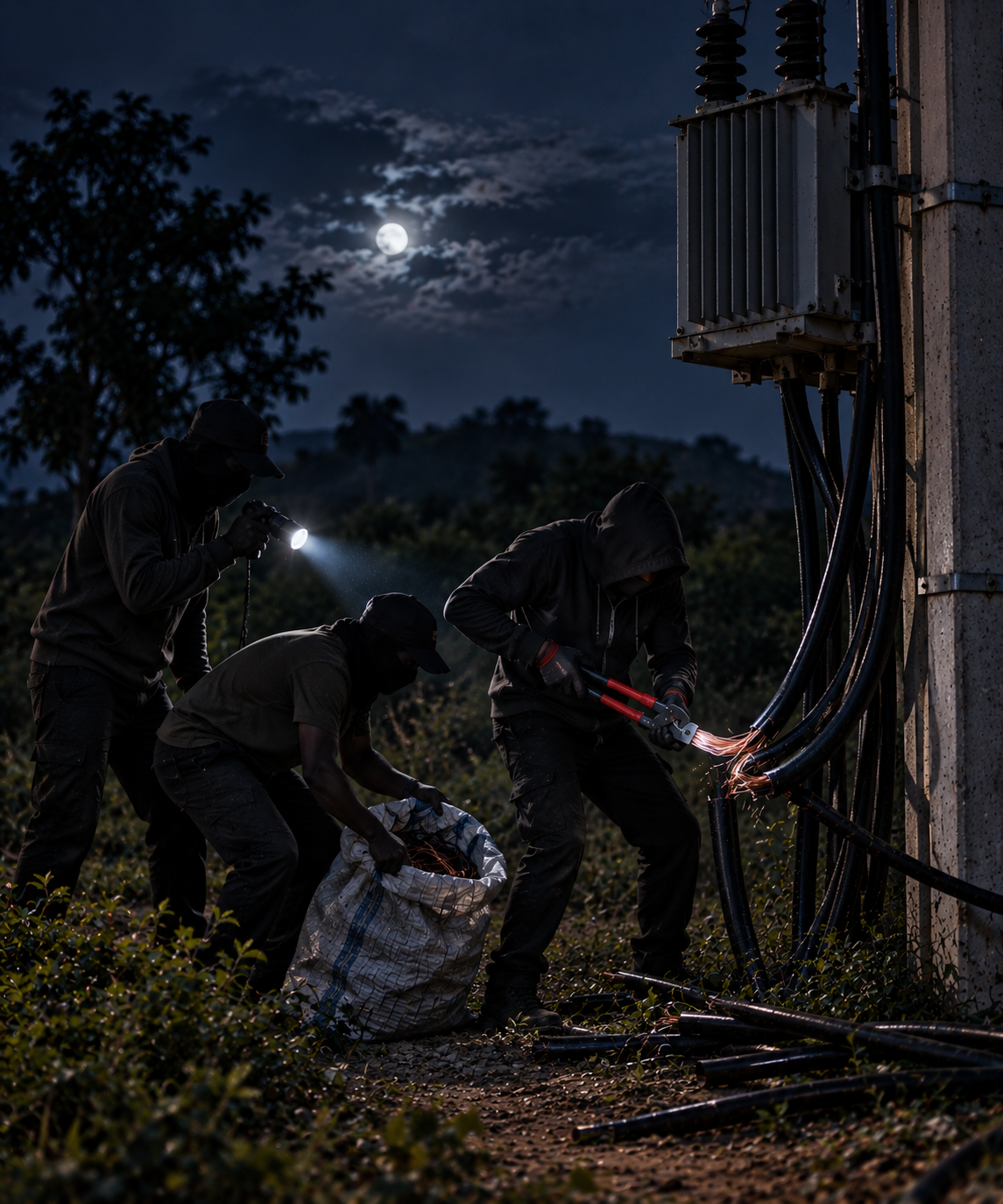
Electricity infrastructure vandalism is one of the most damaging and least understood crimes affecting communities across Nigeria today.
When cables are stripped from a distribution line, a transformer is damaged, or a meter is removed without authorisation, the consequences are immediate and widely felt. An entire street may lose supply. Shops and small businesses are interrupted. Perishable goods are lost. Households are disrupted — often with no warning and through no fault of their own.
The individual responsible may gain a modest sum from selling stolen material. The community served by that equipment absorbs a far greater cost.
This is the reality that the Electricity Act 2023 is designed to address — and it is why AEDC continues to invest significantly in protecting the network that serves its customers.
What “electricity infrastructure” covers
The term refers to the physical equipment used to deliver electricity to homes, businesses, schools, and offices: poles, overhead and underground cables, transformers, meters, and associated materials.
This equipment is engineered, installed, and maintained to deliver safe and reliable supply. When it is deliberately removed or damaged, restoration is rarely immediate. Specialised equipment such as transformers and distribution cabling must be sourced, transported, installed, and tested before supply can be safely restored — a process that criminal interference forces communities to endure unnecessarily.
The offence does not end with the person who removes the cable
This is a part of the law that is frequently misunderstood.
Under the Electricity Act 2023, a person who receives stolen electrical lines or materials, knowing or having reason to believe that they are stolen, commits an offence — separately from the person who originally removed them.
Stolen infrastructure retains value only where there is a market for it: someone prepared to buy, store, or transport it. By addressing both ends of that transaction, the Act recognises that reducing demand for stolen materials is as important as apprehending those who remove them.
This is directly relevant to scrap dealers, electricians, and contractors who may be offered electrical materials at prices significantly below market value, with limited explanation of their origin. Where the circumstances give reason to believe that material may be stolen, proceeding with the transaction carries legal consequences under the Act.
The same principle applies to storing, holding, or transporting electrical materials without lawful entitlement to them.
Accidental damage is treated differently
Not all damage to electricity infrastructure arises from theft or vandalism. Equipment is sometimes damaged unintentionally during construction, excavation, or related work carried out near electrical lines.
The Electricity Act 2023 distinguishes between deliberate theft and negligent damage, and provides separate, lesser penalties for the latter — alongside a requirement to meet the cost of restoring the damaged equipment.
Anyone planning work near electrical infrastructure is encouraged to confirm the location of network equipment and seek guidance before proceeding. Doing so protects both the contractor and the community served by that equipment.
What the law provides for
The Electricity Act 2023 sets out the following penalties for offences involving electricity infrastructure:
- Theft of electric lines, materials, or meters (Section 209): a fine of not less than ₦500,000, imprisonment of three to five years, or both, on first conviction. A subsequent offence attracts a fine of not less than ₦1,000,000, or five years’ imprisonment.
- Receiving stolen electrical materials (Section 210): a fine of up to three times the value of the property received, or imprisonment of up to four years, or both.
- Negligent damage to electricity materials (Section 212): a fine of ₦300,000, in addition to the cost of restoring the damaged equipment.
- Intentionally cutting a supply line to disrupt power (Section 213): a fine of not less than ₦300,000.
- Malicious damage to public streetlights (Section 214): a fine of up to ₦200,000.
These penalties are determined and applied by the courts upon conviction, through due legal process. AEDC’s role is to support lawful enforcement by working with the relevant security and regulatory authorities — not to determine guilt or impose penalties.
How AEDC is responding
Protecting the distribution network is an operational priority for AEDC, and the Company continues to take active steps to address infrastructure theft and vandalism, including:
- Working with law enforcement and relevant security agencies to support the investigation and prosecution of infrastructure-related offences.
- Engaging community leaders, market associations, and residents’ groups across the franchise area to strengthen local awareness and vigilance.
- Prioritising the replacement and restoration of vandalised equipment to return affected communities to supply as safely and quickly as circumstances allow.
- Maintaining confidential, independently managed reporting channels so that members of the public can raise concerns without fear of exposure.
- Educating customers, contractors, and traders on the provisions of the Electricity Act 2023 and the risks associated with dealing in stolen electrical materials.
Vandalism is a criminal act carried out by third parties, often at night and without warning. Preventing it entirely is beyond the reach of any single organisation — which is why AEDC’s approach combines operational response with enforcement support and sustained community engagement.
Reporting suspicious activity — safely and confidentially
Customers and residents who observe suspicious activity around electrical infrastructure — unfamiliar individuals near a transformer, cables being removed, or unauthorised work on network equipment — are strongly advised not to approach or confront those involved.
Personal safety comes first. The most effective action any member of the public can take is to report the activity promptly, allowing AEDC and the relevant authorities to respond.
We understand that many people hesitate to report what they see because they are concerned about being identified. For this reason, AEDC’s whistleblowing channels are independently managed by Deloitte, ensuring that reports are received and handled confidentially, outside the Company’s direct control.
To report energy theft, vandalism, or related suspicious activity:
- Hotline: 0800 847 6337
- Email: tip-offs@deloitte.ng
- In person: any AEDC Customer Service Centre
A shared interest in protecting the network
The electricity distribution network runs directly through the communities it serves — along streets, through markets, and past homes and businesses. Its protection is a shared interest between AEDC, its customers, community leaders, and law enforcement.
Electricity infrastructure is not scrap material. It is the system that keeps homes powered, businesses operating, and communities connected. Safeguarding it protects everyone who depends on it.
Contact AEDC
For general enquiries, service issues, or customer support:
- Customer Care Line: 08039070070
- WhatsApp: 09162012128, 09161012128
- Email: customercare@abujaelectricity.com
- Website: www.abujaelectricity.com
- Facebook: @abujaelectricity
- Instagram: @aedcelectricity
To report energy theft or vandalism confidentially (independently managed by Deloitte):
- Hotline: 0800 847 6337
- Email: tip-offs@deloitte.ng
- In person: any AEDC Customer Service Centre
