
How to Save Electricity Without Switching Off Your Comfort
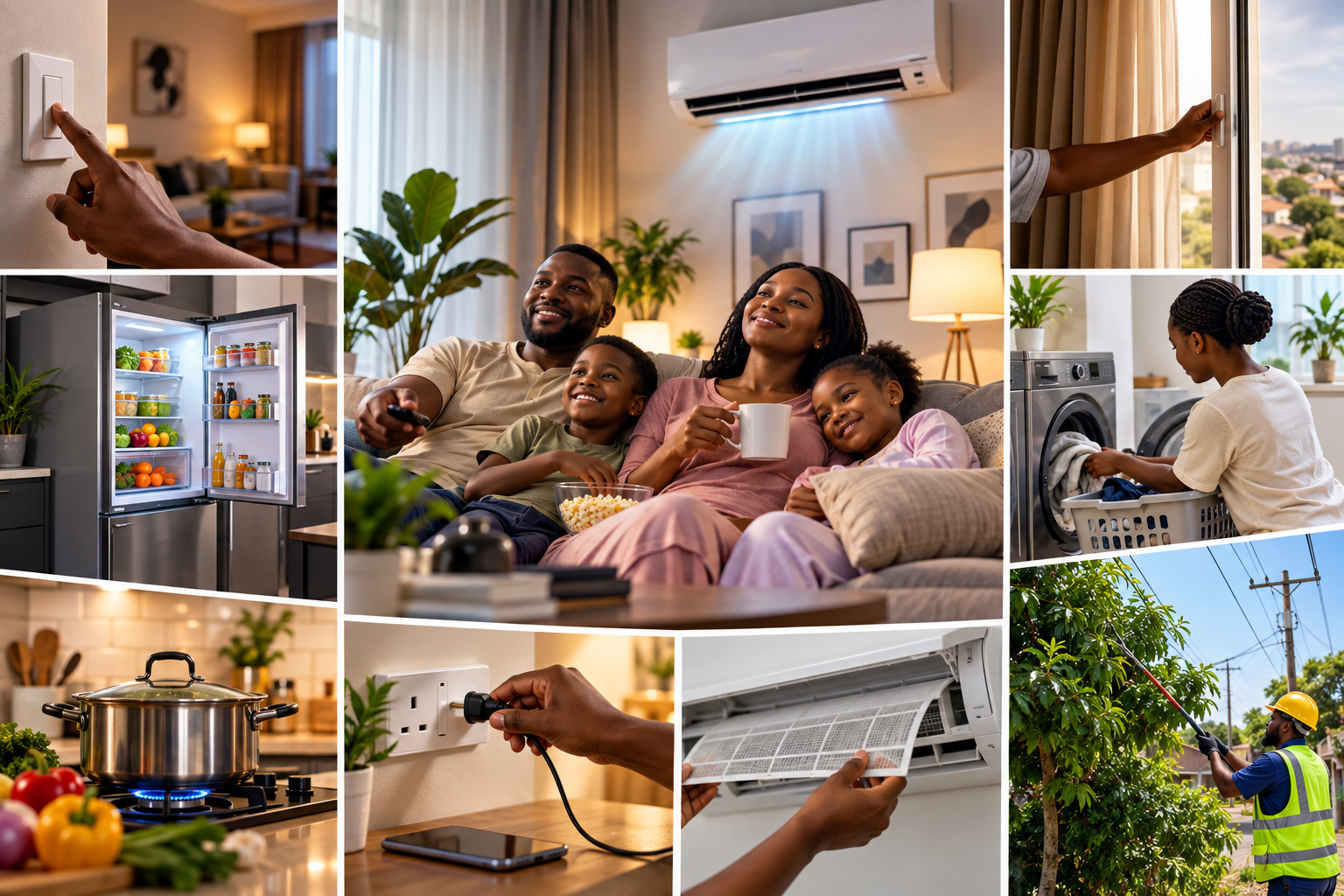
Practical ways to reduce unnecessary electricity consumption without giving up the comfort you enjoy.
Let’s be honest: when people hear “save electricity,” they often imagine switching everything off, sweating through the night and giving up the comforts they enjoy.
But energy efficiency isn’t about making your home uncomfortable. It’s about getting the comfort you need while wasting less electricity.
There is a difference between switching off a fan in an empty room and switching it off while you’re trying to sleep. There is a difference between running your AC in a closed room and running it with the doors wide open.
The goal is simple: Keep the comfort. Reduce the waste.
And many of the easiest changes cost nothing.
Start With What You’re Not Using
Walk around your home for a moment. Is a fan running in an empty bedroom? Is the television still on after everyone has left the room? Is the kitchen light burning when nobody is there?
These things seem small, but repeated every day, they become unnecessary electricity consumption.
Try making “last person out, switch it off” a household habit. The same applies to decoders, game consoles, computers and other devices that don’t need to remain on when nobody is using them.
Your AC Isn’t the Enemy
For many Nigerian homes, air conditioning is part of everyday comfort. So this isn’t about telling you to stop using it.
Instead, ask: are you making your AC work harder than necessary?
If the AC is running while doors and windows are open, cool air escapes and warm air enters. The unit then has to keep working to maintain the temperature.
A few simple habits can help:
- Keep doors and windows closed while the AC is running.
- Choose a comfortable temperature rather than automatically setting it to the lowest possible level.
- Clean the filters regularly so airflow isn’t unnecessarily restricted.
- Avoid cooling empty rooms for long periods.
- When replacing an old unit, consider energy-efficient models and their long-term operating costs.
Nigeria’s energy-efficiency policy specifically promotes energy-efficient technologies and efficiency standards for air-conditioning systems and household appliances.
Look at the Appliances You Use Every Day
Your refrigerator, cooker, kettle, iron and other household appliances can quietly add to your electricity consumption.
With your refrigerator, avoid leaving the door open while deciding what you want. Check that the door seal is working properly and allow very hot food to cool appropriately before storing it.
In the kitchen, boil only the water you need, batch your ironing where practical, and avoid repeatedly heating a large appliance for very small tasks.
The idea isn’t to stop using these appliances. It’s to use them intentionally.
The same thinking applies to electronics. Chargers, televisions, computers, routers and other devices may continue consuming electricity while connected or on standby, depending on the device. Where practical, switch off or unplug equipment that doesn’t need to remain on.
Think Beyond the Purchase Price
Buying an appliance is not just about what you pay at the shop. It is also about what it costs to operate over time.
When choosing an air conditioner, refrigerator, fan or other appliance, look at its energy-efficiency information, capacity and available energy-saving features not just the price tag.
A slightly higher upfront cost can sometimes make sense when the appliance is designed to use energy more efficiently over its working life.
Let Your Meter Tell the Story
If you’re on a prepaid meter, don’t wait until your units are almost finished before paying attention.
Try a simple seven-day “waste less” experiment.
For one week, be deliberate about switching off unused appliances, managing your AC, reducing unnecessary standby use and paying attention to your highest-consuming appliances.
Then compare what you observe with your normal pattern.
You may discover that the biggest difference comes from something as simple as how long the AC runs—or how often certain appliances are left on unnecessarily.
Your own consumption pattern is one of the best places to start.
Your Quick Before-Bed Check
Before settling in for the night, take a few seconds to check:
- Unnecessary lights are off.
- Unused appliances are switched off.
- Doors and windows are closed if the AC is running.
- The AC is set to a comfortable temperature.
- The refrigerator door is properly closed.
- High-energy appliances aren’t running unnecessarily.
- Damaged plugs, cables or sockets are not being used.
You don’t need to be perfect. You just need to be consistent.
So, don’t think of energy efficiency as giving up your comfort. Think of it as getting more value from the electricity you use.
Same comfort. Less waste. Smarter electricity use.
