
Building a Stronger Electricity Network: Why Reliability Requires More Than Power
When electricity supply improves, customers notice.
A business can operate for longer. A household can rely less on alternative sources of power. A hospital or public facility can function with greater confidence.
But reliable electricity does not begin and end with generation.
It depends on the strength of the entire electricity network—from generation and transmission to distribution infrastructure and the systems that connect electricity to customers.
For Abuja Electricity Distribution Plc (AEDC), strengthening that network requires investment across several fronts.
Strengthening the Network Behind the Supply
Electricity distribution networks need continuous investment to keep pace with growing demand.
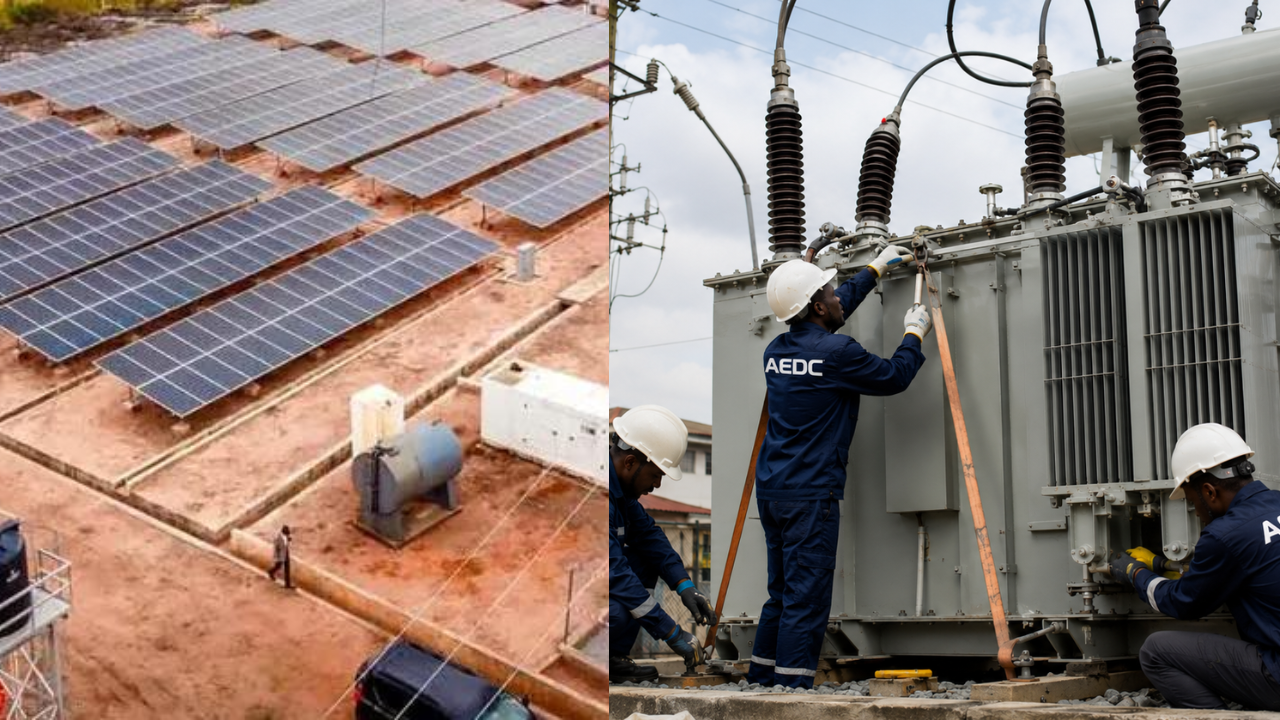
New feeders, transformers and other network infrastructure can provide additional capacity and help strengthen supply to communities and businesses.
This is particularly important as the areas served by AEDC continue to grow and electricity demand increases.
But distribution infrastructure does not operate in isolation.
A distribution company can only deliver the electricity that reaches its network. This is why improvements in transmission capacity are equally important.
Major transmission projects designed to increase capacity into areas served by AEDC can create additional room for distribution infrastructure to perform more effectively.
The lesson is simple: every part of the electricity value chain matters.
Building Resilience Through Distributed Generation
Another important part of the future is creating additional sources of electricity supply.
AEDC, working with sister company Transform Energy, is exploring distributed and embedded generation to support priority customers and critical facilities.
The objective is not to replace the national grid.
Rather, distributed generation can provide additional resilience by bringing some generation closer to where electricity is needed and reducing dependence on a single source of supply.
For a growing electricity network, having more options can make the system more resilient.
Investment Must Be Protected
Building infrastructure is only one part of the challenge.
That infrastructure must also be protected and maintained.
Vandalism, energy theft and damage to electricity equipment have real consequences. When a transformer is vandalised or electricity is illegally consumed, resources that could have supported network improvement are diverted towards repairs, replacement and loss recovery.
This is why building a sustainable electricity network requires a partnership between the utility and its customers.
Utilities must continue to invest and improve service.
Customers must pay for electricity consumed, reject energy theft and help protect infrastructure in their communities.
Everyone benefits when the network is protected.
Everyone loses when it is damaged.
Preparing for a Growing Network
The electricity needs of communities will continue to evolve.
More homes will be built. More businesses will open. New industrial and commercial activity will emerge. Public infrastructure will require more reliable electricity.
The network therefore has to evolve ahead of demand.
That means investing in physical infrastructure while also improving technology, metering, network visibility and alternative sources of supply.
No single project will solve every electricity challenge.
But a combination of sustained investment, stronger infrastructure, better technology and shared responsibility can create a more resilient electricity system.
The ultimate objective is not simply to build more infrastructure.
It is to build an electricity network that is strong enough for today’s customers, flexible enough for tomorrow’s needs and sustainable enough to keep improving.
That is the future electricity distribution must work towards and it is a future that requires everyone across the electricity value chain to play their part.
